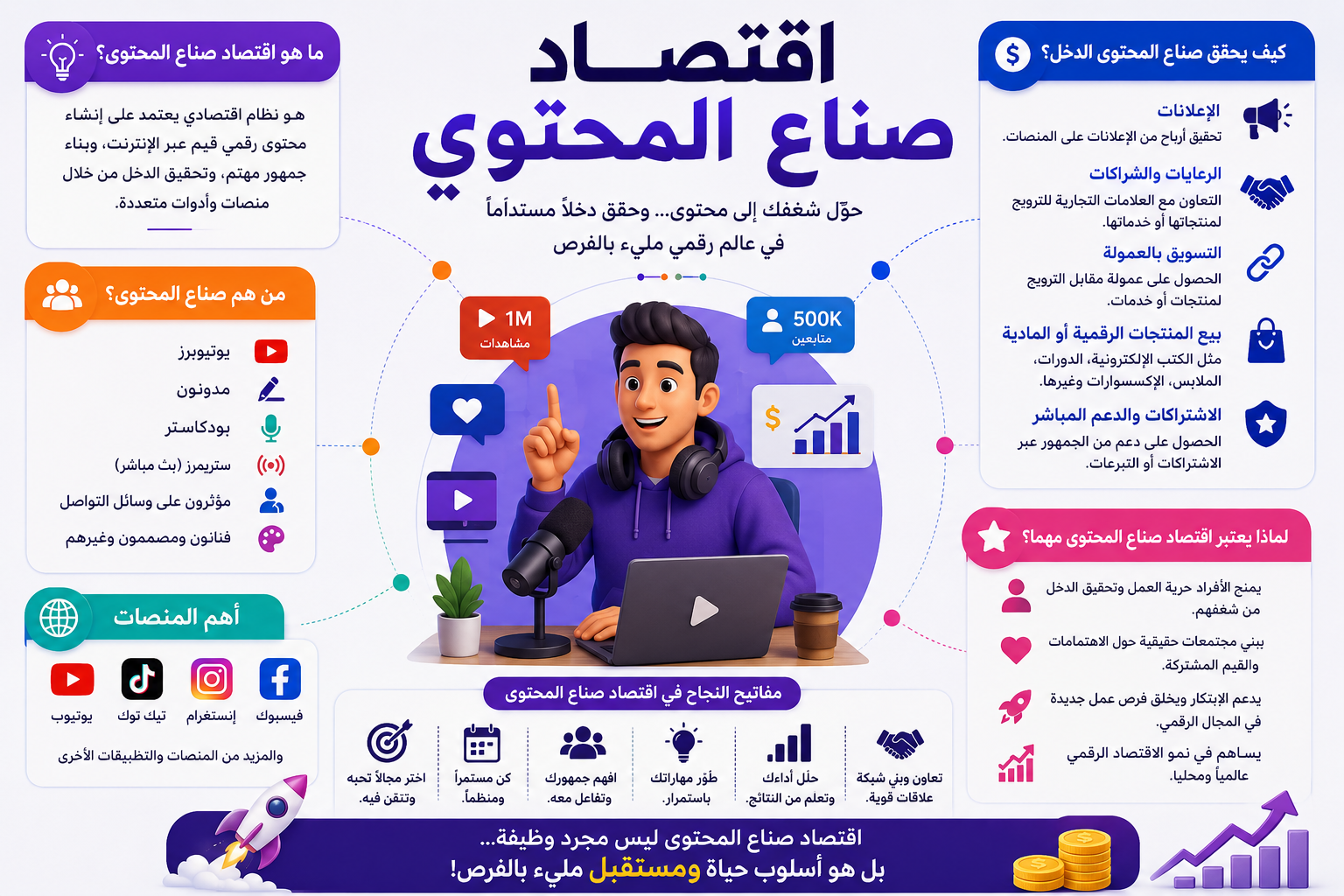
Creator Economy: Your Guide to Understanding the New Digital Economy
Creating content is no longer just a hobby or a way to express ideas—it has become a complete economic ecosystem that offers real opportunities to generate income and build successful digital businesses. With the rapid growth of social media platforms and the increasing demand for digital content, the Creator Economy has transformed the way individuals connect with audiences and brands, opening new opportunities for creators to monetize their skills, knowledge, and creativity.
In this guide, you'll learn what the Creator Economy is, how it works, its main income sources, key benefits and challenges, and how you can start building a successful career in today's digital economy.
- What Is the Creator Economy?
The Creator Economy is a modern economic model built around individuals who create digital content online, such as videos, articles, podcasts, images, and live streams, with the goal of building an audience and generating income through multiple revenue streams. It enables creators to turn their skills, expertise, and passions into sustainable businesses without the need to establish a traditional company.
The Creator Economy relies on digital platforms such as YouTube, TikTok, Instagram, Facebook, and LinkedIn, where creators can earn money through advertising, affiliate marketing, brand partnerships, digital product sales, subscriptions, and live-streaming gifts.
As the digital economy continues to expand, the Creator Economy has become one of the fastest-growing sectors worldwide, offering creators the opportunity to build personal brands, reach global audiences, and generate sustainable income by delivering valuable and engaging content.
- What Is the Creator Economy?
The Creator Economy is a digital economic ecosystem where individuals create online content and generate income by building an audience and delivering valuable content. This includes videos, articles, images, podcasts, newsletters, live streams, and other forms of digital media.
This economy enables creators to turn their skills, knowledge, and creativity into multiple revenue streams, including advertising, affiliate marketing, brand sponsorships, digital products or services, and paid subscriptions. Thanks to the growth of digital platforms, anyone with a unique idea or valuable expertise can build a personal brand and earn income without requiring significant startup capital.
Today, the Creator Economy is one of the key pillars of the modern digital economy, helping businesses connect with their target audiences while giving creators more opportunities to build sustainable, content-driven businesses.
- How Does the Creator Economy Work?
The Creator Economy works by creating digital content that attracts a specific audience and then turning that audience into a source of income through multiple monetization models. The more valuable the content and the stronger the audience engagement, the greater the opportunities for generating revenue and building a sustainable digital business.
It typically works through the following stages:
1. Create Valuable Content
Produce content that educates, entertains, or solves problems for your target audience, such as videos, articles, podcasts, images, or live streams.
2. Build an Engaged Audience
By consistently publishing content, creators grow a loyal community. Success depends not only on follower count but also on trust and audience engagement.
3. Monetize Your Content
Once an audience is established, creators can earn income through:
- Advertising
- Affiliate marketing
- Brand partnerships
- Digital products or services
- Paid subscriptions
- Live-streaming gifts
4. Scale Your Business
As the audience grows, creators can expand by launching their own products, opening an online store, offering courses, or building a team to grow their brand and revenue.
Ultimately, success in the Creator Economy depends on creating high-quality content, maintaining consistency, understanding your audience, and diversifying income sources rather than relying on a single platform or revenue stream.
-
Why Has the Creator Economy Become Important?
The Creator Economy has become one of the most influential sectors of the digital economy, transforming the way individuals and brands connect with audiences. Content is no longer just a tool for entertainment or marketing—it has become a powerful asset for building trust, growing personal brands, creating new career opportunities, and generating sustainable income.
The importance of the Creator Economy can be seen in several key areas:
1. Multiple Income Opportunities
Creators can earn money through various revenue streams, including advertising, affiliate marketing, brand sponsorships, digital products, online courses, and paid subscriptions, reducing their reliance on a single source of income.
2. Building a Personal Brand
Consistently creating valuable content helps individuals establish a strong personal brand, gain credibility, and attract collaboration opportunities with businesses and organizations.
3. Supporting Business Growth
Many companies now rely on content creators to promote their products and services in a more authentic and engaging way, making creators an essential part of modern digital marketing strategies.
4. Reaching a Global Audience
Digital platforms enable creators to connect with audiences around the world without requiring a large marketing budget, creating opportunities for international growth.
5. Encouraging Creativity and Innovation
The Creator Economy empowers people to share unique ideas, develop creative skills, and produce valuable content that educates, entertains, or inspires audiences.
6. Driving the Digital Economy
Content creators contribute to the growth of e-commerce, digital marketing, freelancing, and online education, making the Creator Economy a key pillar of today's digital landscape.
As digital platforms continue to evolve, the Creator Economy is expected to expand further, offering even more opportunities for creators and businesses in the years ahead.
-
Who Are Content Creators?
Content creators are individuals who produce and publish digital content online to educate, entertain, inform, or engage an audience. They use various digital platforms to build a loyal community and generate income from the content they create.
Content creation is not limited to making videos. It includes producing articles, images, podcasts, newsletters, live streams, illustrations, and many other forms of digital media.
Some of the most common types of content creators include:
- Video creators on YouTube, TikTok, and Instagram.
- Bloggers who write informative or niche-focused articles.
- Podcast hosts who create audio content across different topics.
- Influencers who engage audiences and collaborate with brands.
- Educators and online instructors who share knowledge through courses and tutorials.
- Designers and photographers who showcase and monetize their creative work.
- Writers and digital creators who publish stories, newsletters, or eBooks.
Although their content formats may differ, all content creators share the same goal: to provide valuable content, build trust with their audience, and create sustainable income opportunities in the digital economy
- Most Popular Creator Economy Platforms
The success of content creators largely depends on choosing the right platform for their content and target audience. Today, many digital platforms provide creators with the tools they need to publish content, build engaged communities, and generate income through advertising, subscriptions, brand partnerships, and product sales.
Some of the most popular Creator Economy platforms include:
1. YouTube
YouTube is one of the world's largest content creation platforms. It allows creators to earn money through advertising, channel memberships, Super Chat, and brand collaborations, making it one of the leading platforms for long-form video content.
2. TikTok
TikTok has become one of the fastest-growing social media platforms thanks to its short-form videos. It offers creators multiple monetization opportunities, including creator rewards programs, live gifts, brand partnerships, and TikTok Shop, which enables creators to sell products directly to their audience.
3. Instagram
Instagram is an ideal platform for sharing photos, Stories, and Reels. Many creators use it to build their personal brands and generate income through sponsored content, affiliate marketing, and collaborations with businesses.
4. Facebook
Facebook provides several monetization tools, including in-stream ads, subscriptions, and live streaming features, making it a valuable platform for creators with active and engaged communities.
5. LinkedIn
LinkedIn focuses on professional content and is an excellent platform for industry experts, entrepreneurs, and business professionals who want to share their knowledge, build authority, and attract career or business opportunities.
6. Twitch
Twitch is the leading platform for gaming and live-streaming creators. It allows streamers to earn revenue through subscriptions, advertising, and viewer donations.
7. Substack
Substack enables writers and creators to publish free or paid newsletters, allowing them to build a loyal readership and earn recurring income through subscriptions.
8. Patreon
Patreon helps creators offer exclusive content to subscribers in exchange for a monthly membership fee. It is widely used by artists, writers, musicians, educators, and other creative professionals.
9. Medium
Medium is a publishing platform that allows writers to share articles with a broad audience and earn money through its Partner Program based on reader engagement.
10. Pinterest
Pinterest helps content creators drive traffic to their websites, blogs, and online stores. It is particularly effective for creators in niches such as design, fashion, home décor, food, and DIY, making it a powerful platform for content marketing and audience growth
- If you're planning to sell products directly through TikTok, check out our article "TikTok Shop Guide: How to Set Up a Store and Start Selling Step by Step" to learn how to create your store and start selling successfully https://gravity-media.net/wp-admin/post.php?post=1143&action=edit
- Sources of Income in the Creator Economy
The Creator Economy relies on multiple income streams, allowing creators to generate revenue in different ways rather than depending on a single source. Diversifying income is one of the key factors for long-term success, as it helps creators build a more stable and sustainable business.
The following are the main sources of income in the Creator Economy:
1. Advertising Revenue
Advertising is one of the most common income sources for content creators. Creators earn money by displaying ads on their videos, articles, or live streams through monetization programs offered by digital platforms.
- If you'd like to learn how digital advertising payment models work, read our articles "What Is CPM?" and "What Is CPC?" to understand how advertising costs are calculated https://gravity-media.net/wp-admin/post.php?post=1090&action=edit
https://gravity-media.net/wp-admin/post.php?post=1108&action=edit
2. Affiliate Marketing
Affiliate marketing is one of the most profitable ways for creators to earn income. Creators promote products or services through unique affiliate links and receive a commission whenever someone completes a purchase or another qualifying action using those links.
- Learn how to get started by reading our article "How to Make Money Online with Affiliate Marketing: A Step-by-Step Guide https://gravity-media.net/wp-admin/post.php?post=1158&action=edit.
3. Brand Sponsorships
Companies collaborate with content creators to promote their products or services in exchange for payment or other benefits. The success of these partnerships depends on the creator's credibility and audience engagement.
4. Selling Digital Products
Content creators can increase their income by selling digital products, such as:
- eBooks
- Templates
- Design assets
- Guides
- Downloadable files
5. Selling Physical Products
Some creators launch their own brands and sell physical products directly to their audience, such as clothing, accessories, or niche-related products.
https://gravity-media.net/wp-admin/post.php?post=1143&action=edit If you're planning to sell products through TikTok, read our article "TikTok Shop Guide: How to Set Up a Store and Start Selling Step "
6. Paid Subscriptions
Many platforms allow creators to offer exclusive content to subscribers in exchange for a monthly fee, providing a recurring and reliable source of income.
7. Online Courses and Consulting
Creators with expertise in a specific field can earn money by offering online courses or consulting services. This is one of the most sustainable income sources for educational content creators.
8. Live Streaming Gifts
Many digital platforms allow viewers to send virtual gifts or donations during live broadcasts, which creators can convert into real income.
- Benefits of the Creator Economy
The Creator Economy offers many advantages that have made it one of the fastest-growing sectors in the digital economy. It gives individuals the opportunity to turn their skills and passions into a source of income while building a personal brand and reaching audiences around the world.
Some of the key benefits of the Creator Economy include:
1. Multiple Income Streams
The Creator Economy allows creators to earn money from multiple sources, including advertising, affiliate marketing, brand sponsorships, and the sale of products and services, helping them build a more stable income.
2. Work Flexibility
Content creators can work from anywhere and at any time, providing greater flexibility in managing their schedules and maintaining a healthy work-life balance.
3. Building a Personal Brand
Consistently creating valuable content helps strengthen a creator's digital identity, build audience trust, and increase opportunities to collaborate with brands and businesses.
4. Global Audience Reach
Digital platforms enable creators to reach millions of people worldwide without requiring a large marketing budget.
5. Low Startup Costs
Getting started in the Creator Economy does not require significant capital. Many creators begin with a smartphone or computer and an internet connection, then gradually upgrade their equipment as their business grows.
6. Skill Development
Working as a content creator helps develop valuable skills such as writing, video production, editing, digital marketing, data analysis, and community management.
7. Long-Term Growth Opportunities
As content quality improves and audiences grow, creators have greater opportunities to increase their income, launch new products, and expand their businesses into sustainable digital brands.
- Challenges of the Creator Economy
Although the Creator Economy offers significant opportunities, succeeding in this field comes with several challenges. Building an audience and generating sustainable income require time, consistency, and the ability to adapt to the constantly changing digital landscape.
Some of the main challenges of the Creator Economy include:
1. Intense Competition
As the number of content creators continues to grow, standing out and reaching the target audience has become more difficult. Creators need to produce unique, high-quality content to remain competitive.
2. Changing Platform Algorithms
Digital platforms frequently update their algorithms, which can affect content visibility and audience reach. Creators must stay informed and adapt their strategies to these changes.
3. Unstable Income
Creator earnings may vary from month to month due to changes in views, engagement, or platform policies. For this reason, diversifying income sources is essential.
4. The Need for Consistency
Success in content creation requires publishing new content regularly to maintain audience engagement and support long-term growth.
5. Time and Workload Management
Content creation involves much more than filming or writing. It includes planning, research, design, editing, marketing, and performance analysis, making time management a major challenge.
6. Keeping Up with Technological Changes
The creator industry evolves rapidly with new platforms, tools, and AI technologies. Continuous learning is necessary to stay competitive and improve content quality.
7. Maintaining Audience Trust
Audience trust is one of the most valuable assets for any creator. Providing accurate information and being transparent about advertisements and brand partnerships are essential for building long-term credibility.
- How to Get Started in the Creator Economy
Getting started in the Creator Economy has never been easier, but achieving long-term success requires a clear strategy, consistency, and valuable content. Success is not determined by expensive equipment but by the quality of your content and the value you provide to your audience.
Follow these steps to begin your journey in the Creator Economy:
1. Choose Your Niche
Start by selecting a niche that matches your skills, knowledge, or interests, such as digital marketing, technology, education, fitness, or travel. A focused niche helps you attract the right audience.
2. Identify Your Target Audience
Understand who you want to reach, what their interests are, and what problems they need help solving so you can create content that meets their needs.
3. Choose the Right Platform
Select the platform that best fits your content style, such as YouTube, TikTok, Instagram, LinkedIn, or any other platform that aligns with your audience and goals.
4. Create High-Quality Content
Focus on producing valuable, accurate, and engaging content while maintaining high standards in writing, video production, or design. Quality content is the foundation of audience growth.
5. Publish Consistently
Posting content on a regular schedule helps increase visibility, build audience trust, and improve your chances of long-term growth.
6. Engage with Your Audience
Respond to comments, listen to audience feedback, and encourage interaction. Building strong relationships with your community is essential for lasting success.
7. Learn Marketing and Performance Analytics
Understand key performance metrics such as Click-Through Rate (CTR), Cost Per Click (CPC), and Cost Per Mille (CPM) to improve your content strategy and make data-driven decisions.
Internal Link: Learn more by reading our articles about CTR, CPC, and CPM to understand the most important content and advertising performance metrics.
8. Diversify Your Income Streams
Avoid relying on a single source of income. Combine advertising, affiliate marketing, brand sponsorships, product or service sales, and paid subscriptions to build a more stable and sustainable business.
If you want to increase your earnings, read our article on Affiliate Marketing to discover one of the most effective monetization methods for content creators https://gravity-media.net/wp-admin/post.php?post=1158&action=edit
- Best Niches for Content Creators
Choosing the right niche is one of the most important factors for success in the Creator Economy. The best niche is one that matches your skills, interests, and the needs of your target audience. A well-chosen niche helps you build an engaged community and increases your long-term earning potential.
Some of the best niches for content creators include:
1. Digital Marketing
This niche covers SEO, paid advertising, social media marketing, email marketing, and other digital marketing strategies that businesses and individuals want to learn.
2. Technology
Technology creators produce content about gadgets, software, artificial intelligence, cybersecurity, product reviews, and the latest tech news.
3. Education & Personal Development
This niche includes online courses, tutorials, educational videos, language learning, and personal growth content, making it one of the most sustainable content categories.
4. Finance & Business
Content creators in this niche share information about personal finance, entrepreneurship, investing, freelancing, and business growth.
5. Health & Fitness
This category focuses on workouts, nutrition, healthy habits, wellness, and fitness advice for people looking to improve their lifestyle.
6. Travel & Tourism
Travel creators share destination guides, travel experiences, planning tips, and recommendations that inspire audiences to explore new places.
7. Food & Cooking
This niche includes recipes, cooking tutorials, restaurant reviews, and food recommendations, making it highly popular across digital platforms.
8. Gaming
Gaming creators produce live streams, gameplay videos, game reviews, tutorials, and gaming news for audiences interested in the gaming industry.
9. Fashion & Beauty
Fashion and beauty creators share content about clothing, makeup, skincare, styling tips, and beauty trends, especially on platforms like Instagram and TikTok.
10. Art & Design
This niche includes graphic design, illustration, photography, animation, and branding content, making it ideal for creative professionals.
- Difference Between the Creator Economy and the Influencer Economy
Although the terms Creator Economy and Influencer Economy are often used interchangeably, they are not the same. The Creator Economy includes everyone who creates digital content and earns income from it, while the Influencer Economy focuses primarily on individuals who influence audience decisions, especially in marketing and brand promotions.
The following table highlights the key differences:
Creator Economy Influencer Economy Focuses on creating valuable educational, informative, or entertaining content. Focuses on influencing audience decisions and promoting products or services. Includes bloggers, writers, podcasters, educators, designers, video creators, and many other digital creators. Primarily includes social media influencers. Generates income through multiple sources such as advertising, affiliate marketing, product sales, online courses, and subscriptions. Relies mainly on brand sponsorships, paid promotions, and marketing partnerships. Aims to provide long-term value and build an engaged community. Focuses on expanding influence and increasing audience reach for marketing campaigns. Success is possible even with a smaller but highly engaged niche audience. Brand opportunities are often closely tied to audience size and influence.In general, the Influencer Economy is a part of the Creator Economy. Every influencer is a content creator, but not every content creator is an influencer. Many creators build successful businesses through educational content, blogging, podcasts, or specialized expertise without relying primarily on social media influence or brand promotions.
-
The Future of the Creator Economy
The Creator Economy is experiencing rapid growth as technology and digital platforms continue to evolve. It is expected to play an even greater role in the global economy over the coming years. As demand for digital content increases, creators will have more opportunities to build successful businesses and generate sustainable income from multiple revenue streams.
The following trends are expected to shape the future of the Creator Economy:
1. Greater Adoption of Artificial Intelligence
Artificial intelligence will help creators produce content, edit videos, design graphics, and analyze performance data, improving both content quality and productivity.
2. More Diverse Revenue Streams
Creators will rely on more than just advertising. Paid subscriptions, digital products, affiliate marketing, e-commerce, and brand partnerships will continue to become more important sources of income.
3. Growth of Social Commerce
Social media platforms are expanding direct selling features, such as TikTok Shop and Instagram Shopping, giving creators more opportunities to convert their audiences into customers and increase sales.
Internal Link: If you'd like to learn how to sell through TikTok, read our article "TikTok Shop Guide: How to Set Up a Store and Start Selling Step by Step."
4. Rising Demand for Specialized Content
Audiences are increasingly looking for trustworthy, high-quality content in specific niches, making expertise and value more important than ever.
5. Continued Development of Monetization Programs
Digital platforms are continuously introducing new monetization features, providing creators with more opportunities to earn income and grow their businesses.
6. Stronger Focus on Personal Branding
Building a strong personal brand will become even more important, helping creators earn audience trust, attract partnerships, and expand their long-term opportunities.
7. Increased Competition and Professionalism
As more people enter the Creator Economy, competition will continue to grow. Success will depend on producing high-quality content, embracing innovation, understanding audience needs, and making data-driven decisions.
In the future, the Creator Economy will become more than just a way to earn money—it will continue to evolve into a complete model of digital entrepreneurship, enabling individuals to build sustainable businesses and reach global audiences through creativity and innovation.
-
Conclusion
The Creator Economy is no longer just a new trend; it has become a core part of the modern digital economy, offering real opportunities for anyone with an idea, a skill, or a passion. As digital platforms continue to grow and demand for content increases, the field becomes more competitive but also more profitable and accessible.
Success in this space does not depend only on follower count, but on the value a creator delivers, consistency in content creation, and a deep understanding of the audience. Those who start today and continuously develop their skills have a strong chance of building a sustainable income and a flexible career in a rapidly changing world.