- Introduction
In today’s digital world, making money online has become more accessible than ever. One of the most popular and effective ways to earn income online is through Affiliate Marketing.
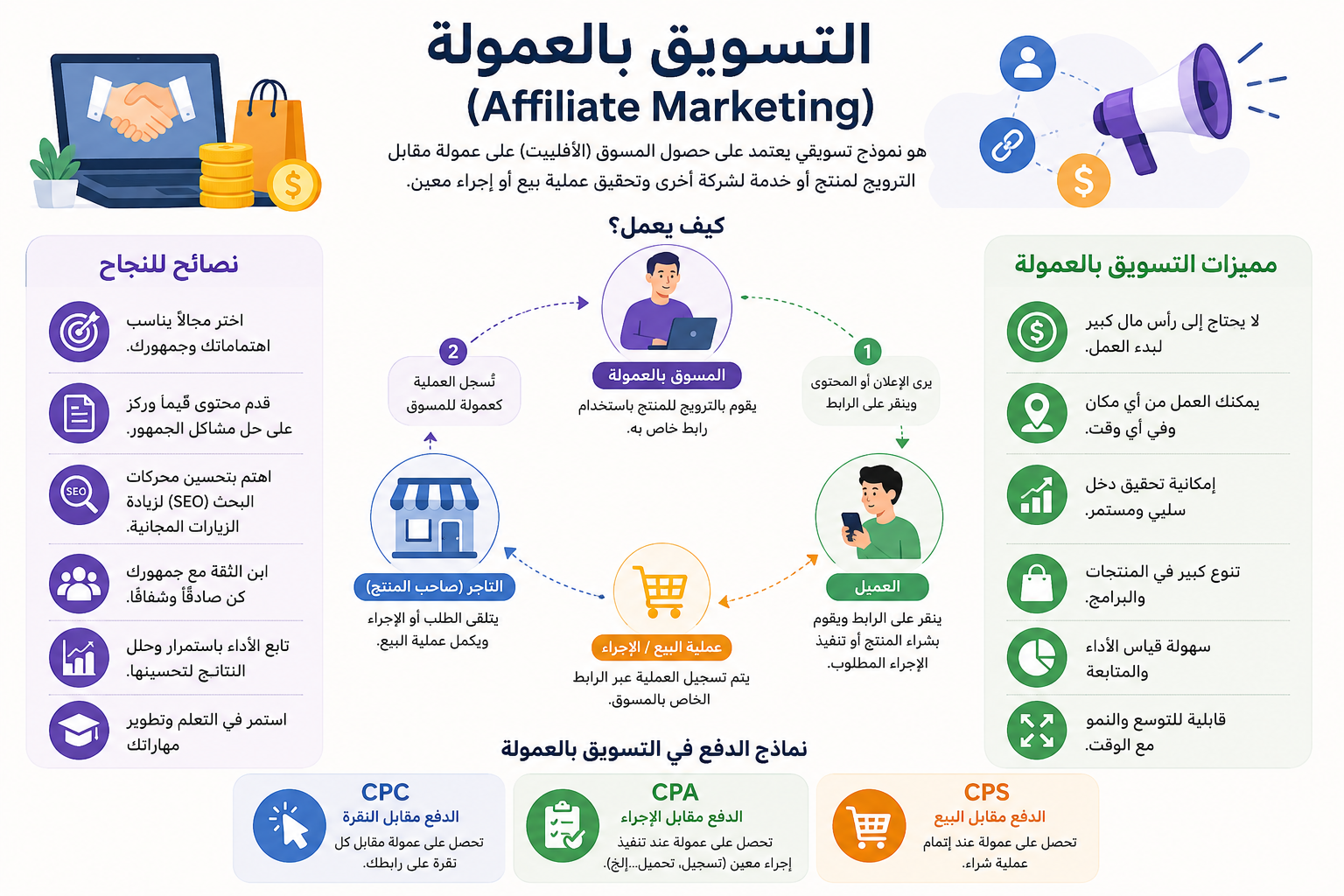
Affiliate Marketing is a performance-based strategy where you promote products or services offered by other companies and earn a commission for every sale, click, or action generated through your unique referral link.
What makes this model so attractive is that you don’t need to create your own product, handle inventory, or deal with customer service. Instead, you simply focus on promoting and driving traffic.
In this guide, we will explore what Affiliate Marketing is, how it works, its advantages and disadvantages, and how beginners can start their journey successfully.
-
? What is Affiliate Marketing
Affiliate Marketing is a performance-based marketing system where you promote products or services from other companies and earn a commission for every sale, click, or action made through your unique referral link.
In simple terms, you don’t own the product, but you help sell it using your special link, and when someone makes a purchase through that link, you earn a percentage of the profit.
- You can learn more about Affiliate Marketing and how it works in detail through educational guides provided by Shopify, which offers beginner-friendly explanations and real examples of how affiliate programs operate in the e-commerce world https://www.shopify.com/news/about-us?utm_source=chatgpt.com
-
How Affiliate Marketing Works
Affiliate Marketing works through a simple system that connects merchants (companies), affiliates (marketers), and customers using unique tracking links.
Step-by-step explanation:
1. Join an Affiliate Program
The first step is to sign up for an affiliate program such as Amazon Associates or other affiliate networks.
Once approved, you become an official affiliate marketer.
2. Get Your Unique Affiliate Link
After joining, you receive a special affiliate link that contains a unique tracking code.
This link is used to track all actions and sales generated through your promotion.
3. Choose a Product to Promote
You select a product or service that matches your audience’s interests, then start promoting it through:
- TikTok
- YouTube
- Blogs or websites
- Paid ads
4. Drive Traffic to Your Link
When people see your content, they may click on your affiliate link to learn more or purchase the product.
5. Tracking the Activity
The system tracks users who click your link using cookies or tracking codes.
Even if the purchase happens later, it may still be credited to you depending on the program’s rules.
6. Customer Makes a Purchase or Action
If the customer completes the required action (such as buying a product, signing up, or downloading an app), the sale is recorded.
7. Earn Your Commission
Once the sale is confirmed, you receive a commission based on the agreed percentage or fixed amount.
Simple Example:
- You share an affiliate link on TikTok
- 100 people click the link
- 10 people make a purchase
- You earn a commission from those 10 sales
-
Roles of Affiliate Marketing System
🇬🇧 English Version
Affiliate Marketing consists of four main parties, and its success depends on how well they work together. It is directly connected to digital marketing concepts such as CPC, CPA, and CTR, which measure performance, clicks, and conversions.
1. Merchant
The merchant is the company or business that owns the product or service.
They define the commission structure and pay affiliates based on results or actions.
This is closely related to CPA (Cost Per Action) since payment is based on actual results.
2. Affiliate (Marketer)
The affiliate is the person who promotes the product using a unique tracking link.
Their main role is to generate traffic, clicks, and sales.
This connects directly with CPC (Cost Per Click) and CTR (Click-Through Rate) since success depends on engagement and clicks.
3. Customer
The customer is the person who clicks the affiliate link and completes the purchase or required action.
Without the customer, no commission is generated.
4. Affiliate Network
The affiliate network acts as an intermediary between the merchant and the affiliate. It handles:
- Tracking clicks
- Recording sales
- Calculating commissions
- Managing payments
It works similarly to CPM and CPC advertising systems that measure campaign performance https://gravity-media.net/wp-admin/post.php?post=1108&action=edithttps://gravity-media.net/wp-admin/post.php?post=1090&action=edit
- Types of Affiliate Marketing
Affiliate Marketing can be divided into several types based on how affiliates promote products and their level of involvement with the brand or product.
1. Unattached Affiliate Marketing
In this type, affiliates promote products or services without having any direct experience or connection with them. They usually rely on paid advertising or marketing campaigns to drive traffic.
Example: Running Google Ads or social media ads to promote a product you have never used.
2. Related Affiliate Marketing
This type involves promoting products that are related to your niche or audience, even if you haven't personally used them.
Example: A digital marketing blog recommending SEO or advertising tools.
The success of this type often depends on improving CTR (Click-Through Rate), as higher click rates can lead to more potential sales.
3. Involved Affiliate Marketing
This is the most trusted type of affiliate marketing. Affiliates promote products they have personally used and genuinely recommend based on their own experience.
Example: A content creator reviewing a product and sharing an affiliate link in the video description.
This type focuses on generating conversions, making it closely related to CPA (Cost Per Action) where commissions are earned after a customer completes a specific action, such as a purchase.
- Ways to Work in Affiliate Marketing
There are many ways to succeed in Affiliate Marketing, and the best method depends on your audience, content strategy, and preferred platform. The more targeted traffic you generate, the greater your chances of earning commissions.
1. Build a Website or Blog
Creating a website is one of the most effective affiliate marketing strategies. You can publish product reviews, tutorials, and SEO-optimized articles to attract organic traffic. Improving your Click-Through Rate (CTR) in search results can increase website traffic and generate more affiliate sales.
2. Promote Through Social Media
Platforms such as TikTok, Instagram, Facebook, and X allow you to reach a large audience by creating engaging content and sharing affiliate links.
If you're interested in selling products directly on TikTok, check out our TikTok Shop guide to understand the differences between TikTok Shop and Affiliate Marketing.
3. Start a YouTube Channel
YouTube is one of the most effective platforms for affiliate marketing. You can create product reviews, tutorials, or comparison videos and include affiliate links in the video description.
4. Use Email Marketing
If you have an email list, you can send newsletters featuring valuable content and product recommendations to increase conversions.
This strategy is closely related to CPA (Cost Per Action) because earnings are generated when subscribers complete a desired action.
5. Run Paid Advertising Campaigns
Many affiliate marketers use Google Ads and social media advertising to reach more potential customers.
Understanding CPC (Cost Per Click) is essential because your advertising costs directly affect your affiliate profits.
6. Create Educational Content and Reviews
Publishing helpful articles, videos, podcasts, or product reviews helps build trust with your audience and encourages them to purchase through your affiliate links.
-
Advantages of Affiliate Marketing
Affiliate Marketing is one of the most popular digital marketing models because it offers many benefits for both affiliates and businesses. Here are some of its main advantages:
1. Low Startup Cost
You can start affiliate marketing without creating your own products, managing inventory, or handling shipping, making it an excellent option for beginners.
2. Work from Anywhere
Affiliate marketing only requires an internet connection and a computer or smartphone, giving you the flexibility to work from anywhere at any time.
3. Opportunity to Generate Passive Income
High-quality content, such as blog posts or videos, can continue generating traffic and affiliate commissions over time, especially when optimized for SEO.
Improving your Click-Through Rate (CTR) can increase the number of visitors clicking your affiliate links and boost your earnings.
4. Wide Range of Products and Services
Affiliate programs are available in almost every industry, allowing you to promote products that match your niche and audience.
5. Easy Performance Tracking
Most affiliate programs provide detailed analytics, including clicks, conversions, and commissions, helping you measure and improve your results.
If you're running paid campaigns, understanding CPC (Cost Per Click) is also important because advertising costs directly affect your profitability.
6. Scalability
As your experience grows, you can promote multiple products across different platforms, such as your website, YouTube channel, or TikTok account, increasing your earning potential.
If you're interested in selling products directly on TikTok, you can also read our TikTok Shop article to understand how it differs from Affiliate Marketing.
- Disadvantages of Affiliate Marketing
1. High Competition
Affiliate marketing is a highly competitive industry, especially in profitable niches such as technology, finance, and e-commerce.
2. It Takes Time to See Results
Success doesn't happen overnight. Building an audience, creating valuable content, and improving your SEO strategy all require time and consistency.
3. Income Is Not Guaranteed
Your earnings depend on website traffic, clicks, and conversion rates, which means your monthly income can vary.
Monitoring your Click-Through Rate (CTR) can help you understand how users interact with your content and improve your results.
4. Dependence on Affiliate Program Policies
Affiliate programs may change their commission rates, terms, or even discontinue their programs, which can directly affect your earnings.
5. Continuous Learning Is Required
Successful affiliate marketers need skills in content creation, SEO, digital marketing, and performance analysis.
If you use paid advertising, understanding Cost Per Click (CPC) is essential to manage your advertising costs effectively.
6. Low Conversion Rates
Getting many clicks does not always lead to sales. If visitors don't complete the desired action, your commissions will remain low.
Tracking Cost Per Action (CPA) and optimizing your content and landing pages can help improve conversion rates.
-
Tips for Success in Affiliate Marketing
Succeeding in Affiliate Marketing requires more than simply sharing affiliate links. It involves building trust, creating valuable content, and continuously analyzing your performance. Here are some essential tips for success:
1. Choose the Right Niche
Select a niche that matches your interests or expertise. This will help you create high-quality content and connect with your target audience.
2. Create Valuable Content
Focus on publishing helpful articles, videos, tutorials, and product reviews instead of simply posting affiliate links.
3. Optimize Your Content for SEO
Search Engine Optimization (SEO) helps drive organic traffic to your website, increasing your chances of generating affiliate sales.
A higher Click-Through Rate (CTR) in search results can lead to more visitors clicking your affiliate links.
4. Promote Products That Fit Your Audience
Recommend products that genuinely solve your audience's problems rather than choosing offers based only on high commissions.
5. Track Your Performance
Monitor your clicks, traffic, conversions, and commissions regularly to identify what works best.
If you use paid advertising, understanding Cost Per Click (CPC) is essential for maximizing your return on investment.
6. Build Trust with Your Audience
Honesty and transparency are key to long-term success. Share genuine experiences, discuss both pros and cons, and only recommend products you believe in.
If you're promoting products through TikTok Shop or Affiliate Marketing, building trust can significantly improve your conversion rates.
7. Keep Learning and Improving
Digital marketing is constantly evolving. Stay updated with the latest SEO strategies, marketing tools, and affiliate trends to improve your results over time.
- Affiliate Marketing vs. Traditional Marketing
Although both Affiliate Marketing and traditional marketing aim to increase sales and reach customers, they differ in several important ways, including costs, payment models, and performance measurement.
Feature Affiliate Marketing Traditional Marketing Payment Model Affiliates earn commissions based on results such as sales or leads Businesses pay for advertising regardless of the final results Risk Level Lower financial risk Higher due to advertising expenses Product Ownership No need to own the product The business usually owns the product or service Performance Measurement Based on clicks, conversions, and sales Measured using different campaign metrics Flexibility Can be done from anywhere using multiple platforms Often requires larger budgets and marketing teamsIf you use paid advertising alongside affiliate marketing, understanding CPC (Cost Per Click) helps control advertising costs, CTR (Click-Through Rate) measures user engagement, and CPA (Cost Per Action) evaluates the cost of generating conversions.
-
Conclusion
Affiliate Marketing is one of the most effective digital marketing models for individuals and businesses, allowing you to earn commissions without creating your own products or managing inventory. By choosing the right niche, creating valuable content, and understanding key performance metrics such as CPC, CTR, and CPA, you can improve your campaigns and increase your earning potential.
If you're just getting started, focus on learning, building trust with your audience, and joining reliable affiliate programs. With consistency, the right strategy, and continuous improvement, Affiliate Marketing can become a sustainable source of online income.